I spend my days building and refining AI tools. My work lives in the cloud, runs on powerful servers, and pushes the boundaries of automation.
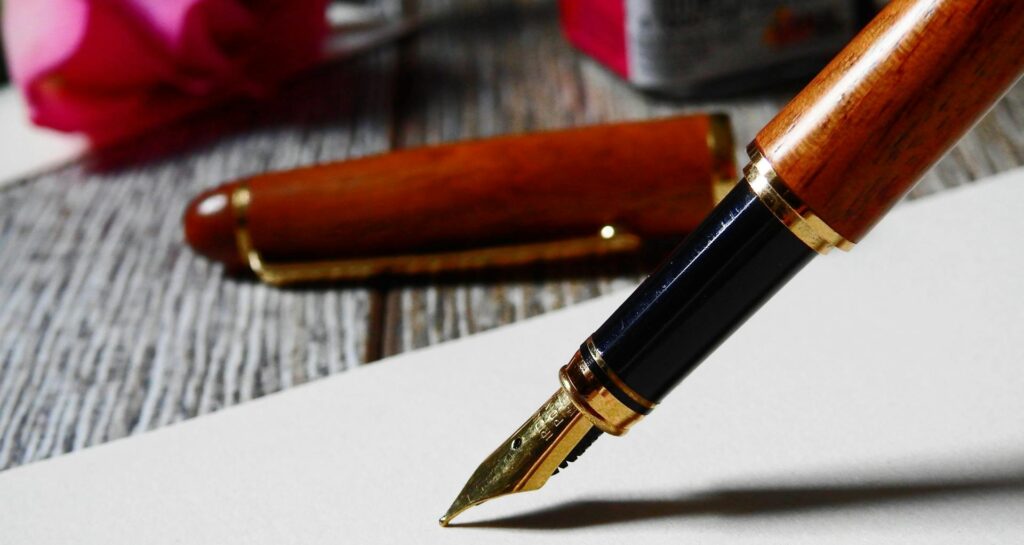
And yet, if you walked into my office right now, you’d see a battered A5 notebook on my desk. Not for decoration. Not for nostalgia. I use it every single day.
It’s not a contradiction. It’s survival.
The Speed of Thought vs. the Speed of Tools
AI tools are fast—faster than any human can type or search. But they require booting up, logging in, loading the right context. My brain doesn’t wait for that.
When an idea hits—while I’m in a meeting, on a flight, or just pouring coffee—pen and paper are instant. Zero load time. Zero friction.
That gives me certainty. I know that no matter where I am or what I’m doing, I can capture a thought before it evaporates. The AI can process it later. The notebook keeps it alive now.
The Privacy of Unplugged Thinking
Every digital note I take leaves a trace—synced, stored, searchable. That’s a feature most of the time. But sometimes I want the freedom to write without thinking about metadata, tags, or security layers.
On paper, my raw thinking is mine alone until I choose otherwise. That autonomy—the ability to think without the invisible audience of “future searchability”—lets me explore riskier ideas, more vulnerable thoughts, and half-formed concepts without self-censoring.
The Memory Advantage of the Handwritten Word
Research shows that writing by hand improves retention. For me, it’s not just about remembering facts—it’s about internalising strategies, frameworks, and patterns.
When I sketch a product flow or map a client’s business model on paper, I remember it days later without checking my notes. That gives me status in the room—I can speak fluidly about complex systems because I’ve already processed them through my pen, not just stored them in a database.
The Design of Distraction-Free Space
Every digital tool competes for your attention. Even the best AI dashboard sits in a browser or app that’s one click away from notifications, messages, and alerts.
Paper doesn’t ping. It doesn’t tempt. It just sits there, offering the exact amount of focus I put into it.
That’s fairness to myself and my work—if I’m dedicating time to a problem, I shouldn’t have to battle the very tools that are supposed to help me solve it.
The Visual Layer AI Can’t Replicate
When I draw in my notebook, it’s messy. Arrows go in all directions. Words sit next to sketches. Some pages look like a map of a city only I’ve visited.
Digital tools, even the flexible ones, impose structure—grids, text boxes, clean lines. Sometimes that’s useful. Sometimes it’s a straitjacket.
Paper lets me see the shape of my thinking exactly as it arrives. That relatedness—connecting directly with my own mental process—often sparks ideas I’d never get from a neatly typed bullet list.
Bridging the Analog and Digital Worlds
I don’t keep my paper notes locked away. Once a page fills up, I decide what belongs in the digital ecosystem. I snap a photo, upload it to my AI workspace, and tag it. The AI can then summarise, cross-link, and search it alongside everything else.
This hybrid approach gives me certainty that no insight gets stranded. I get the creative freedom of analog with the organisational power of digital.
The Ritual That Grounds the Day
My day starts and ends with the notebook. Morning pages for clarity. Evening review for closure.
This isn’t about productivity metrics—it’s about autonomy. I decide what gets my focus before the algorithms, dashboards, and inboxes start shouting. And at night, I decide what thoughts are worth carrying into tomorrow.
It’s my way of telling myself: I run the day, the day doesn’t run me.
Why This Matters Even More in the Age of AI
AI can process faster, search better, and connect more dots than any individual. But it can’t replicate the messy, illogical, deeply human way an idea forms on the back of a napkin.
In meetings, when I open my notebook instead of a laptop, people notice. It signals presence. It shows I’m here to listen, not just to record. That’s status you can’t buy with the latest productivity app.
The Pen Stays on the Desk
I’m not anti-digital. My work depends on AI tools, cloud systems, and automation. But the notebook is the constant.
Paper keeps me fast when inspiration strikes. Private when I need to think without filters. Present when I want to really listen.
And maybe that’s the paradox: the more powerful our tools become, the more valuable the simplest ones get. The AI can help me organise, refine, and act. But the pen? The pen helps me think.